
|
I will be a speaker at Percona Live - London 2011, and I am looking forward to the event, which is packed with great content. A whopping 40 session of MySQL content, plus 3 keynotes and 14 tutorials. It's enough to keep every MySQL enthusiast busy.
Continuent speakers will be particularly busy, as between me and Robert Hodges, we will be on stage four times on Tuesday, October 25th.
|
Tuesday, October 18, 2011
Tungsten Replicator and MySQL Sandbox at Percona Live London 2011


Thursday, September 22, 2011
Upgrading Tungsten Replicator: as easy as ...
When I talked about the usability improvements of Tungsten Replicator, I did not mention the procedure for upgrading.
I was reminded about it by a question in the TR mailing list, and since the question was very relevant, I updated the Tungsten Cookbook with some quick upgrading instructions.
A quick upgrading procedure is as important as the installer. Since we release software quite often, either because we have scheduled features to release or because of bug fixes, users want to apply a new release to an existing installation without much fuss. You can do the upgrade with a very quick and painless procedure.
Let's suppose that you have installed one Tungsten Replicator cluster using this command:
#
# using tungsten-replicator 2.0.4
#
TUNGSTEN_HOME=/home/tungsten/installs/master_slave
./tools/tungsten-installer \
  --master-slave \
  --master-host=r1 \
  --datasource-user=tungsten \
  --datasource-password=secret \
  --service-name=dragon \
  --home-directory=$TUNGSTEN_HOME \
  --cluster-hosts=r1,r2,r3,r4 \
  --start-and-report
If you want to upgrade to the very latest Tungsten Replicator 2.0.5, build 321, this is what you need to do.
- Get the latest tarball, and expand it;
- Stop the replicator;
- Run the update command (this will also restart the replicator)
- Check that the replicator is running again.
#
# using tungsten-replicator 2.0.5-321 (get it from bit.ly/tr20_builds)
#
TUNGSTEN_HOME=/home/tungsten/installs/master_slave
HOSTS=(r1 r2 r3 r4)
for HOST in ${HOSTS[*]}
do
   ssh $HOST $TUNGSTEN_HOME/tungsten/tungsten-replicator/bin/replicator stop
   ./tools/update --host=$HOST --user=tungsten --release-directory=$TUNGSTEN_HOME -q
   $$TUNGSTEN_HOME/tungsten/tungsten-replicator/bin/trepctl -host $HOST services
done
One benefit of this procedure, in addition to being brief and effective, is that the previous binaries are preserved. Before the upgrade, you will see:
$ ls -lh ~/installs/master_slave/ ~/installs/master_slave/releases
/home/tungsten/installs/master_slave/:
total 32K
drwxrwxr-x 3 tungsten tungsten 4.0K Sep 22 22:03 backups
drwxrwxr-x 2 tungsten tungsten 4.0K Sep 22 22:03 configs
drwxrwxr-x 3 tungsten tungsten 4.0K Sep 22 22:03 relay
drwxrwxr-x 4 tungsten tungsten 4.0K Sep 22 22:06 releases
drwxrwxr-x 2 tungsten tungsten 4.0K Sep 22 22:03 service-logs
drwxrwxr-x 2 tungsten tungsten 4.0K Sep 22 22:03 share
drwxrwxr-x 3 tungsten tungsten 4.0K Sep 22 22:03 thl
lrwxrwxrwx 1 tungsten tungsten   75 Sep 22 22:06 tungsten -> /home/tungsten/installs/master_slave/releases/tungsten-replicator-2.0.4
/home/tungsten/installs/master_slave/releases:
total 8.0K
drwxr-xr-x 6 tungsten tungsten 4.0K Sep 22 22:03 tungsten-replicator-2.0.4
The 'tungsten' directory is a symlink to the actual binaries inside the 'releases' directory. After the upgrade, the same directory looks like this:
ls -lh ~/installs/master_slave/ ~/installs/master_slave/releases
/home/tungsten/installs/master_slave/:
total 32K
drwxrwxr-x 3 tungsten tungsten 4.0K Sep 22 22:03 backups
drwxrwxr-x 2 tungsten tungsten 4.0K Sep 22 22:03 configs
drwxrwxr-x 3 tungsten tungsten 4.0K Sep 22 22:03 relay
drwxrwxr-x 4 tungsten tungsten 4.0K Sep 22 22:06 releases
drwxrwxr-x 2 tungsten tungsten 4.0K Sep 22 22:03 service-logs
drwxrwxr-x 2 tungsten tungsten 4.0K Sep 22 22:03 share
drwxrwxr-x 3 tungsten tungsten 4.0K Sep 22 22:03 thl
lrwxrwxrwx 1 tungsten tungsten   75 Sep 22 22:06 tungsten -> /home/tungsten/installs/master_slave/releases/tungsten-replicator-2.0.5-321

/home/tungsten/installs/master_slave/releases:
total 8.0K
drwxr-xr-x 6 tungsten tungsten 4.0K Sep 22 22:03 tungsten-replicator-2.0.4
drwxr-xr-x 6 tungsten tungsten 4.0K Sep 22 22:06 tungsten-replicator-2.0.5-321
If you did some manual change to the files in 2.0.4, you will be able to retrieve them. Upgrading from earlier versions of Tungsten Replicator is not as smooth. Since we changed the installation format, it has become incompatible from previous versions. Clusters running TR 2.0.3 need to be reinstalled manually. The next upgrade, though, will be much faster!
My three MySQL sessions at OOW 2011 - and much more

|
Oracle Open World 2011 is approaching. MySQL is very well represented.
Sheeri has put together a simple table of all the MySQL sessions at OOW, which is more handy than the Oracle schedule.
I will be speaking in three sessions on Sunday, October 2nd.
|
Monday, September 19, 2011
Chaining Replication Clusters
MySQL built-in replication includes a concept called relay slave, which allows you to create hierarchical database clusters.
You can do the same thing with Tungsten, and this can be done in more than one way.
Let's start with two distinct clusters. We can follow the recipes in the Tungsten Cookbook to install a master / slave cluster in three separate hosts and a Tungsten sandbox containing another master/slave cluster.
Now, we want to make the master in the sandbox a slave of the master in the first cluster, as illustrated in the figure below.
 Notice that the recipe works in exactly the same way for two distinct clusters on separate hosts. We are using one sandbox to minimize the number of hosts involved.
To install the bridge between the two cluster, you go to the directory where Tungsten was installed for the master in the sandbox, and run ./tools/configure-service. The purpose of this command is to create a second service in the master, a service that will act as a slave, and fetch data from the other cluster.
To do so, we need to provide some information to the service installer, the most important of which are:
 Using a very similar command, I can connect to a slave of the first cluster, instead of the master, and the final result will be exactly the same.
Notice that the recipe works in exactly the same way for two distinct clusters on separate hosts. We are using one sandbox to minimize the number of hosts involved.
To install the bridge between the two cluster, you go to the directory where Tungsten was installed for the master in the sandbox, and run ./tools/configure-service. The purpose of this command is to create a second service in the master, a service that will act as a slave, and fetch data from the other cluster.
To do so, we need to provide some information to the service installer, the most important of which are:
- the local-service-name, a.k.a. who's the boss, will tell the replicator that this service will live with the 'tsandbox' service, which is the local master.
- the role tells the replicator that this service will fetch data;
- the master-thl-host is the address where to find a master capable of feeding data to this new slave;
- the master-thl-port and thl-port options make sure that the service uses one port for its own dispatching and another one to get data from the master.
cd $HOME/tsb2/db1
./tungsten/tools/configure-service -C \
  --local-service-name=tsandbox \
  --thl-port=12111 \
  --role=slave \
  --service-type=remote \
  --master-thl-host=r1 \
  --master-thl-port=2112 \
  --datasource=127_0_0_1 \
  --svc-start \
  dragon
After this connection, every change in the first cluster master will be replicated to all its slaves, one of which happens to be a master, which will then distribute the same data to all its slaves. So we have a cascade hierarchical replication cluster, similar to what we can have with MySQL native replication. But Tungsten can do something more than that. In MySQL replication, you need to enable a slave to become a relay-slave. In Tungsten, you don't need to do it.
Using a very similar command, I can connect to a slave of the first cluster, instead of the master, and the final result will be exactly the same.
cd $HOME/tsb2/db1
./tungsten/tools/configure-service -C \
  --local-service-name=tsandbox
  --thl-port=12111 \
  --role=slave \
  --service-type=remote \
  --master-thl-host=r3 \
  --master-thl-port=2112 \
  --datasource=127_0_0_1 \
  --svc-start \
  dragon
In my presentations, I call this feature "slave with an attitude". Thanks to Tungsten global transaction ID, a slave can request data to any host. Since the data is not labeled in terms of log files and position (as it is in MySQL), but in terms of sequence numbers, a slave ch ask any server for a given sequence number, and that number identifies a transaction unequivocally.
Friday, September 16, 2011
Quick recipes for database cluster building
One lesson learned in more than two decades working in this industry is that most of the IT professionals are impatient, want to achieve results immediately, and, most importantly, they don't read documentation. Much as the average geek is happy to answer many requests with a dismissive RTFM, the same geeks are not as diligent when it comes to learning about new or updated technologies.
For this reason, there is a kind of documentation that is very much appreciated by busy and impatient professionals: cookbooks. And I am not talking about food. Geeks are not known for being cooks (1) and they like fast food. I am talking about collection of technical recipes, short articles where a problem is briefly stated, and a direct solution is shown.
Working with Tungsten Replicator, I am constantly amazed at all the things you can do with it, and at the same time, I am amazed at how so few people read the documentation. Since I want more users to be aware of the goodies, and being aware of the geeks' aversion to regular docs, I have started putting together a Tungsten Replicator Cookbook, where users can quickly find the recipe to build their cluster of choice.
The problem is stated in one short paragraph, and the solution is outlined with code in the shortest possible way. Can't get any lazier than this! Or maybe you can, but I haven't reached that level yet. I hope I have found a good balance.
Some of the recipes that the cookbook offers are:
- Install a master / slave cluster
- Install a master slave directory with customized parameters
- Install more than one Tungsten Replicator in one host
- Install a direct slave with parallel replication
- Taking over replication from a MySQL slave in direct mode
- Install bi-directional replication
- Install bi-directional replication with additional slave
- Install a three masters replication
- Install a four masters replication
- Modify one or more properties with the installer
- Add one slave to an existing master
Welcome, MySQL commercial extensions
I saw yesterday that MySQL has finally done the right thing, and announced new commercial extensions.
What this means is that paying customers receive something more than users who get the community edition for free.
Believe it or not, when I was working in the community team at MySQL, I was already an advocate of this solution. You may see a contradiction, but there isn't. I would like to explain how this works.
An open source product needs to be developed. And the developers need to get paid. Ergo, the company needs to make money from that product if it wants to continue developing it. Either that, or the company needs to sell something else to pay the bills. (Let's not get into the argument that a pure open source project with universal participation is better, faster, or more marvelous: MySQL was never that, not with Oracle, not with Sun, and not when it was an independent company. If you want a extra-super-ultra open project, go with Drizzle. With MySQL, we need to continue reasoning with the raw material at hand.)
When MySQL was scaling its business, it realized that many customers were not willing to pay for support and consulting alone. To expand the business beyond the simple offer of services, the company created MySQL Network, which soon evolved into MySQL Enterprise, with the addition of the MySQL Monitoring tools and a fast upgrade plan. This was a good proposal for small to medium customers, but not as good for customers with large installations. When you deploy thousands of MySQL servers, you really don't want to upgrade every month. Anyway, for some time, the value proposition from MySQL was that the community users would get one release twice a year, and the paying customers would get one every month.
As a community manager, I strongly objected to that formula, not only because it hurts the community, but also because it hurts customers. When the release is exposed to millions of free users before it goes to the paying customers, chances are that serious bugs are discovered by the community and fixed in due time, before it hurts a high profile customer and needs to be fixed in a hurry at higher cost. One of the main values of MySQL is that it's that its large community adoption and feedback increases stability. Fortunately, I was not the only one who believed that larger distribution is valuable for customers, and the decision was reversed at the end of 2008.
In that period, I and other employees recommended a different value proposition for our customers. Instead of selling fast upgrade plans (which become a liability), MySQL could develop some reserved features that would be given only to paying customers.
There are two problems with reserved features, though: you need to develop them internally. You can't start them in the open, asking the community to test them for bugs, and then give them only to customers when they are ready (There was a faux pas in that direction in early 2008, but it was promptly retracted). These features must be developed as closed source, and tested only internally. The second problem is that MySQL had little internal QA manpower when this discussion arose.
There was another issue, namely that the code base for the next intended version (the fabled 6.0) was brittle. After 2 years in alpha stage, there was little to show for the effort. In parallel to the Oracle acquisition, two important things happened: version 6 was abandoned, and a new effort was started, using the more stable version 5.x as a code base, and a new developing model was launched, based on milestones and robustness.
This new foundation, combined with the injection of experienced QA personnel from the ranks of Sun and Oracle, made the project ready to offer reserved features to customers, while continuing the development of a lot more features for the community edition.
From a community standpoint, I welcome the commercial extensions. It means that the MySQL project will get more revenues, and be able to sustain the public release more easily. In my opinion it's the logical evolution of the project, and it's what MySQL should have done already years ago if it had had the manpower.
There are already detractors who see this release as a sign of the apocalypse. They probably want to see only this one feature in the commercial arena, dismissing the dozens of new features released to the general public under Oracle stewardship. I refuse to enroll in the chorus of critics who judge Oracle on prejudice. I am so far satisfied with what Oracle has done with MySQL. My opinion is based on facts, and since the facts are in favor of the community, I am pleased to say so. If future facts will make me change my opinion, I will say it. But now, I want to say thank you to the MySQL team at Oracle!
Thursday, September 08, 2011
The happiness of failing installations
When you set-up the same software several times (for you or for your customers), you want that software to install quickly and reliably, and you are generally happy when everything works as expected.
In this context, a failing installation is when the installation process exits unexpectedly, and you are left with an error message and the prospect of looking at the manual to find out what was it.
A failing installation is unpleasant, you'd say, and I concur. But do you know what's more unpleasant than a failing installation? It's an installation that succeeds, only to fail silently the first time you try using the application.
Looking at this enhanced definition, it is no surprise that I assert to find happiness in failure. And I have practical reasons for my claim. When I first tried Tungsten Replicator installation, it succeeded. And to my chagrin, the application did not work. I had to dig the reason for not working from the logs, and from that reason I had to figure out what I had done wrong. For example, the log might say "file not found mysql-bin.000003", and from that piece of information I had to figure out that I forgot to make the binary logs directory group readable, so that the 'tungsten' user could see the logs.
But a "successful" installation with later failure often meant that a clean shut down was not possible, and then I had to become an expert at cleaning up messy installations.
The next installation may get past the failure point, and possibly fail (again silently) for a different reason. Sometimes, I had to install four or five times until I get to the working and stable point. And then I'd install on another server, and I made a different mistake (or I forgot to apply the cure for a known mistake) and the stream of successful installations with hidden failures continued for a while.
With the above reminiscences, I am very happy to report that now you can install Tungsten Replicator with the near assurance that when something goes wrong, the installation does not start, and you are given a clear list of what was wrong.
The installer runs a long list of validation probes, and it doesn't stop at the first validation failure. It will try its best to tell you what you should do to reach a satisfactory installation, giving you a detailed list of everything that doesn't match up.
Not only that: the installer checks the requirements on all the servers in your intended cluster, and the installation does not start anywhere until you meet all the requirements in all the servers.
That's why, when my installation fails, I feel very happy, knowing that I won't have to clean up a messy server, and when I fix the problem that made the installation fail, my application will most certainly work.
Wednesday, September 07, 2011
Tungsten Replicator 2.0.4 released: usability and power

| It has been a bumpy ride, with dozens of issues opened and resolved, but we finally feel that Tungsten Replicator 2.0.4 is ready for prime time. There have been quite a lot of changes. Most notably, the replicator is much faster, especially when it comes to parallel replication, and it is much easier to install, thanks to its new integrated installer, which can validate all the requirements to install the replicator, and suggest remedies when the requirements aren't met. This new installer is so good, in fact, that calling it installer is an insult. It is a legitimate cluster builder, able to install a full fledged cluster from a central location. |
--property=key=value. Using this option wisely, you can now customize the replication properties straight at the start. What used to require several commands and a restart of the replicator right after the installation, now flows smoothly and quickly with one single command.
With this release, Tungsten Replicator is closer to become a tool for mass consumption. The old installation method (which we have deprecated and renamed, to discourage anyone from using it) required time, constant attention, and it was unforgiving. The new one will let you make your mistakes freely. If something is amiss anywhere in all the servers where you are installing, it won't install and it will tell you what went wrong. This is probably my favorite feature, because it allows Tungsten to be used by less experienced users.
Now it's up to the users. We have no illusion that the product is bug free, and we want to hear from users who try it and report on Issues.
Sunday, September 04, 2011
Finding tables without primary keys
I was checking a third party server, and I needed to find if there were tables without primary keys. This is important to know, not only because the lack of primary keys affects performance and data accuracy in general, but also because in row-based replication performance can degrade beyond belief when updating tables without primary keys.
Anyway, I did not remember off the bat any method to get this information from a server with thousands of tables, and thus I went to find a solution on my own.
My first instinct called for using the
COLUMNS table from the INFORMATIOn_SCHEMA, and so I came up with this query, where I sum the number of columns that are inside either a PRIMARY or UNIQUE key and filter only the ones where such sum is zero (i.e. no primary or unique keys):
select
    table_schema,table_name
from
    information_schema.columns
group by
    table_schema,table_name
having
    sum(if(column_key in ('PRI','UNI'), 1,0)) = 0;
This query got the job done, and it was quite quick as well.
Then, since I was chatting with Sheeri Cabral about other matters, I asked her if she could come up with an alternative solution. She suggested a LEFT JOIN between the information_schema.tables and information_schema.statistics, which I translated into this query:
select
    t.table_schema, t.table_name
from
    information_schema.tables  t
    left join information_schema. statistics s
       on t.table_schema=s.table_schema and t.table_name=s.table_name
       and s.non_unique=0
where
    s.table_name is null;
This query works on the principle that it removes from the tables list all the ones for which there is no corresponding table in the statistics table.
This query also works. Using both queries in a relatively empty server did not show any significant difference. But since I knew that I had to use this method on a very busy server, with a lot of tables, I quickly created 1,000 databases, each containing 5 tables, two of which did not have any primary or unique key.
Now came the first surprise.
The query with GROUP BY took about 0.5 seconds, while the one using LEFT JOIN used 11 seconds.
I was about to congratulate myself for my acumen, when I realized that, in addition to schema and table names, I also needed the table engine.
For the second query, that is not a problem. Adding the engine to the columns list works OK, and the query runs in 11 seconds like before.
The first query, though, can't list the engine. There is no 'engine' in the COLUMNS table. So I needed a JOIN. Thus my query became
select
    t.table_schema,t.table_name,engine
from
    information_schema.tables t
    inner join information_schema .columns c
        on t.table_schema=c.table_schema and t.table_name=c.table_name
group by
    t.table_schema,t.table_name
having
    sum(if(column_key in ('PRI','UNI'), 1,0)) =0;
Guess what? This query ran in 17 seconds (!). So much for my instinct!
Joins without keys are not efficient in MySQL, and tables in the information schema are no exception.
If anyone has a more efficient method of getting a list of tables without primary key (the list including schema name, table name, and engine), I am curious to know.
Friday, September 02, 2011
Primary keys from experience
From time to time I see articles in defense of natural primary keys against surrogate keys.
I don't take an immovable stand on either side, as I have seen good cases for both. In general, I like the idea of a natural primary key, when I see one that it is really natural.
Quite often, though, a natural primary key has proved itself faulty. And most of the times, when such faults happened, it was because of limited understanding of the data. I like to describe this kind of misinformation as data analysis culture clash.
When choosing a natural primary key, one should consider which element, or group of elements, are unique in a given set. Not only that, they must be immutable, at least within that set.
For example, in a group of people, we may assume that a combination of name, surname, date and place of birth is a good natural primary key. Well, no. It isn't, for several reasons. Read on for a few real cases.
If we rule out the above combination, perhaps we could use the Social Security Number as a valid key? Not really.
The fact is that the above assumptions work well if we consider only people from the same country in current times. If we extend our data definition to include people from different countries, or historical records, then the assumption collapses.
A practical case: The birth place. This is a fair assumption. In combination with other elements (e.g.: date of birth, name, and surname) it can provide good basis for unique and immutable records. If you consider people in the United States today, you are right. Even in the UK, or Italy, or France. But try applying this method to places with recent political changes due to war or revolutions, and suddenly the name of the town may suddenly change. What was before VictoryBurg in Oppresslandia is now known as Heroes City in Freelandia. And this happens now, in the 21st century. If your set includes historical data, these occurrences may become frightfully frequent.
Speaking of historical times, if you are dealing with really old records, you may want to consider that dates are less than immutable. The way we count days in most Western countries is called the Gregorian calendar, which was adopted by a handful of countries in 1582. Dates before October 5, 1582 and after October 14, 1582 are recorded using two different calendars. It is inconvenient, but if you know that you may avoid wrong date calculations. Simple, isn't it? Not really. If your records include data from different countries, you will have to take into account when this calendar was adopted. Just to give a few examples, England adopted the Gregorian calendar in 1752, Japan in 1873, Russia in 1918, Turkey in 1926.
When dealing with people from different countries, you may be tempted to use citizenship as an immutable property. That may work, if you consider citizenship at birth and are prepared to keep the names of not currently existing states. If, instead, you get the citizenship from the employee's passport, you may incur in one or more of the following cases (all happened in practice during my work with an international organization):
- Some employees came to work with the passport they had before the political change, and now that the country has split, they have different passports, depending on which side of the new border they live.
- Some employees have parents from different countries and are entitled to more than one passport. They came to work initially with one passport, and came again a few year later with a different one because of different benefits.
- Some employees started working with a given citizenship, and then they got a different one because of marriage, political asylum, or other legal means.
- Some employees became stateless. The equivalent of NULL in a table field.
Monday, August 15, 2011
CodeBits - An event of competitive innovation
 It was my pleasure and privilege to attend Codebits in 2009. As Roland Bouman says, its talk choice method is based on public voting, and therefore everyone cha have contribute to the schedule.
But that is not the main reason for attending this extraordinary event. It is not just a conference. It's an innovation fest. For 1 and 1/2 days, it's a conference, where the speakers are encouraged to bring to their audience the most innovative and inspiring talks. In the afternoon of the second day, the event becomes a competition, where the teams that have registered will have 24 hours to bring a project to completion, and they have to start and finish within the allotted time.
The project can be anything, and I have seen quite a lot of exciting stuff rolling live in the huge pavilion:
I could hardly ignore robotics, as these little mechanical smurfs were running all over the place and you would have to be careful not to squash them when you walked.
There was plenty of occasions for planning of great projects, together with attempts at improving social relations, and mixing up with big brother.
There were projects based on 3D printing, and less broad projects like all-seasons keyboards.
A very popular session, followed by practical workshops was lock picking. I attended one of them, learned how to pick simple and less simple locks, and I brought home some lockpicking tools.
On a more technical level, I was there with Lenz Grimmer and Kai Seidler, we spoke about MySQL and other cool things, and we had lots of fun for three days.
Besides the teams hacking away at their projects, there were several teams showcasing technology that had been developed by winners of the previous years, such as 3D television and intelligent phone networks.
In short, This was an inspiring event, which I can warmly recommend.
Thursday, August 11, 2011
Usability improvements in Tungsten Replicator 2.0.4
If you love a software product, you should try to improve it, and not be afraid of criticizing it. This principle has guided me with MySQL (where I have submitted many usability bugs, and discussed interface with developers for years), and it proves true for Tungsten Replicator as well. When I started working at Continuent, while I was impressed by the technology, I found the installation procedure and the product logs quite discouraging. I would almost say disturbing. Fortunately, my colleagues have agreed on my usability focus, and we can enjoy some tangible improvements. I have already mentioned the new installation procedure, which requires just one command to install a full master/slave cluster. I would like to show how you can use the new installer to deploy a multiple source replication topology like the following:  The first step is to install one master in each node. I can run the commands from node #4, which is the one that will eventually receive the updates from the remote masters, and where I need to install the slave services:
 TUNGSTEN_BASE=$HOME/newinst
SERVICES=(alpha bravo charlie delta)
REPLICATOR=$TUNGSTEN_BASE/tungsten/tungsten-replicator/bin/replicator
for N in 1 2 3 4
do
INDEX=$(($N-1))
./tools/tungsten-installer \
--master-slave \
--master-host=qa.r$N.continuent.com \
--datasource-user=tungsten \
--datasource-password=secret \
--service-name=${SERVICES[$INDEX]} \
--home-directory=$TUNGSTEN_BASE \
--cluster-hosts=qa.r$N.continuent.com \
--start-and-report
done
The above loop will install a master (remotely or locally) in the four servers. Then I need to create the slave services. To do it, I use the updated configure-service in the tools directory. TUNGSTEN_TOOLS=$TUNGSTEN_BASE/tungsten/tools
COMMON_OPTIONS='-C -q
--local-service-name=delta
--role=slave
--service-type=remote
--allow-bidi-unsafe=true
--datasource=qa_r4_continuent_com'
$TUNGSTEN_TOOLS/configure-service $COMMON_OPTIONS --master-host=qa.r1.continuent.com alpha
$TUNGSTEN_TOOLS/configure-service $COMMON_OPTIONS --master-host=qa.r2.continuent.com bravo
$TUNGSTEN_TOOLS/configure-service $COMMON_OPTIONS --master-host=qa.r3.continuent.com charlie
$TUNGSTEN_BASE/tungsten/tungsten-replicator/bin/replicator restart
$TUNGSTEN_BASE/tungsten/tungsten-replicator/bin/trepctl services
These commands create the slave services locally in Delta. After restarting the replicator, a simple test will be creating something different in each master, and check that the data has replicated to the single slave. The latest improvement in matter of usability is the simplification of the replicator logs. Until a few days ago, if you had an error in the replicator, you would get a long list of not exactly helpful stuff. For example, if I create a table in a slave, and then create the same table in the master, I will break replication. The extended log would produce something like this: INFO | jvm 1 | 2011/08/11 18:10:52 | 2011-08-11 18:10:52,216 [tsandbox - q-to-dbms-0] ERROR pipeline.SingleThreadStageTask Event application failed: seqno=1 fragno=0 message=java.sql.SQLException: Statement failed on slave but succeeded on master INFO | jvm 1 | 2011/08/11 18:10:52 | 2011-08-11 18:10:52,217 [tsandbox - Event dispatcher thread] ERROR management.OpenReplicatorManager Received error notification, shutting down services: Event application failed: seqno=1 fragno=0 message=java.sql.SQLException: Statement failed on slave but succeeded on master INFO | jvm 1 | 2011/08/11 18:10:52 | com.continuent.tungsten.replicator.applier.ApplierException: java.sql.SQLException: Statement failed on slave but succeeded on master INFO | jvm 1 | 2011/08/11 18:10:52 | at com.continuent.tungsten.replicator.applier.MySQLDrizzleApplier.applyStatementData(MySQLDrizzleApplier.java:183) INFO | jvm 1 | 2011/08/11 18:10:52 | at com.continuent.tungsten.replicator.applier.JdbcApplier.apply(JdbcApplier.java:1233) INFO | jvm 1 | 2011/08/11 18:10:52 | at com.continuent.tungsten.replicator.applier.ApplierWrapper.apply(ApplierWrapper.java:101) INFO | jvm 1 | 2011/08/11 18:10:52 | at com.continuent.tungsten.replicator.pipeline.SingleThreadStageTask.runTask(SingleThreadStageTask.java:498) INFO | jvm 1 | 2011/08/11 18:10:52 | at com.continuent.tungsten.replicator.pipeline.SingleThreadStageTask.run(SingleThreadStageTask.java:155) INFO | jvm 1 | 2011/08/11 18:10:52 | at java.lang.Thread.run(Unknown Source) INFO | jvm 1 | 2011/08/11 18:10:52 | Caused by: java.sql.SQLException: Statement failed on slave but succeeded on master INFO | jvm 1 | 2011/08/11 18:10:52 | at com.continuent.tungsten.replicator.applier.MySQLDrizzleApplier.applyStatementData(MySQLDrizzleApplier.java:139) INFO | jvm 1 | 2011/08/11 18:10:52 | ... 5 more INFO | jvm 1 | 2011/08/11 18:10:52 | Caused by: java.sql.SQLSyntaxErrorException: Table 't1' already exists INFO | jvm 1 | 2011/08/11 18:10:52 | at org.drizzle.jdbc.internal.SQLExceptionMapper.get(SQLExceptionMapper.java:78) INFO | jvm 1 | 2011/08/11 18:10:52 | at org.drizzle.jdbc.DrizzleStatement.executeBatch(DrizzleStatement.java:930) INFO | jvm 1 | 2011/08/11 18:10:52 | at com.continuent.tungsten.replicator.applier.MySQLDrizzleApplier.applyStatementData(MySQLDrizzleApplier.java:125) INFO | jvm 1 | 2011/08/11 18:10:52 | ... 5 more INFO | jvm 1 | 2011/08/11 18:10:52 | Caused by: org.drizzle.jdbc.internal.common.QueryException: Table 't1' already exists INFO | jvm 1 | 2011/08/11 18:10:52 | at org.drizzle.jdbc.internal.mysql.MySQLProtocol.executeQuery(MySQLProtocol.java:500) INFO | jvm 1 | 2011/08/11 18:10:52 | at org.drizzle.jdbc.internal.mysql.MySQLProtocol.executeBatch(MySQLProtocol.java:546) INFO | jvm 1 | 2011/08/11 18:10:52 | at org.drizzle.jdbc.DrizzleStatement.executeBatch(DrizzleStatement.java:917) INFO | jvm 1 | 2011/08/11 18:10:52 | ... 6 more INFO | jvm 1 | 2011/08/11 18:10:52 | 2011-08-11 18:10:52,218 [tsandbox - Event dispatcher thread] WARN management.OpenReplicatorManager Performing emergency service shutdown INFO | jvm 1 | 2011/08/11 18:10:52 | 2011-08-11 18:10:52,219 [tsandbox - Event dispatcher thread] INFO pipeline.Pipeline Shutting down pipeline: slave INFO | jvm 1 | 2011/08/11 18:10:52 | 2011-08-11 18:10:52,219 [tsandbox - q-to-dbms-0] INFO pipeline.SingleThreadStageTask Terminating processing for stage task thread INFO | jvm 1 | 2011/08/11 18:10:52 | 2011-08-11 18:10:52,219 [tsandbox - q-to-dbms-0] INFO pipeline.SingleThreadStageTask Last successfully processed event prior to termination: seqno=0 eventid=mysql-bin.000002:0000000000000426;20Did you see the reason for the error? No? Neither did I. I would need to open the THL, look for event #1, and determine what it was. Instead, the new user.log looks like this:
2011-08-11 18:10:52,216 ERROR Received error notification: Event application failed: seqno=1 fragno=0 message=java.sql.SQLException: Statement failed on slave but succeeded on master
Caused by : java.sql.SQLException: Statement failed on slave but succeeded on master
Caused by : Statement failed on slave but succeeded on master
Caused by : Table 't1' already exists
Caused by : Table 't1' already exists
2011-08-11 18:10:54,721 INFO  State changed ONLINE -> OFFLINE:ERROR
2011-08-11 18:10:54,721 WARN  Received irrelevant event for current state: state=OFFLINE:ERROR event=OfflineNotification
That's much better. It is not perfect yet, but it will be soon. Right now, it tells me what is wrong without forcing me to go hunting for it amid hundreds of stack trace lines. Give it a try, using the latest replicator build.
Wednesday, August 10, 2011
Call for disclosure on MySQL Conference 2012
Percona has announced Percona Live MySQL Conference and Expo 2012. Kudos for their vision and entrepreneurship. I have seen comments praising their commitment to the community and their willingness to filling a void. I have to dot a few i's and cross some t's on this matter.
Please, let the community know.
That was not the only game in town.
By the end of June, there were strong clues that O'Reilly was not going to organize a conference. The question of who could fill the void started to pop up. The MySQL Council started exploring the options for a community-driven conference to replace the missing one. The general plan was along the lines of "let's see who is in, and eventually run a conference without the big organizer. If nobody steps up, the IOUG can offer a venue in Las Vegas for an independent MySQL conference". The plan required general consensus among the major players, and therefore we started asking around about availability and participation. Percona did not answer our requests. They delayed the meeting, and in the meantime we continued preparing for the plan B of a conference in Vegas. Then some of us received a message from Percona, pre-announcing a conference in Santa Clara. No offer to gather a broad participation from other entities. No sign of wanting to do a neutral event, i.e. an event not tied to a single company.Some background
That was puzzling, because I recall vividly how Baron Schwartz and Peter Zaitzev advocated strongly in favor of an independent conference, not so long ago:The conference is organized and owned by MySQL, not the users. It isn’t a community event. It isn’t about you and me first and foremost. It’s about a company trying to successfully build a business, and other companies paying to be sponsors and show their products in the expo hall.
Baron Schwartz, April 23, 2008.
I would like to see the conference which is focused on the product users interests rather than business interests of any particular company (or personal interests of small group of people), I would like it to be affordable so more people can attend and I’d like to see it open so everyone is invited to contribute and process is as open as possible.
Peter Zaitzev, April 23, 2008.
A call to disclosure
I understand the business motivation to organize a conference with your company name in the title, while at the same time leveraging the wide MySQL community. However, if I have to judge by the organization of previous Percona Live events, I don't see any of the benefits that were advocated three years ago. I see a business conference that is inspired to the same principles that Percona was criticizing in 2008. What is it then? If it is supposed to be a community conference, let's call it "MySQL Conference" and ask for broad participation. There are plenty of people in the community who are willing to help and make the event a success, not only for the benefit of Percona, but for the global benefit of everyone in the ecosystem, including Oracle, the IOUG, and every company with a business related to MySQL. If it is not a community conference, let's state it clearly, so that people can set their expectations accordingly.Unintended consequences
Someone may think it's a good thing to have a MySQL conference without Oracle participation but I am sure most will agree that it is not desirable. Much as I admire Percona's technical merits, if I go to the conference I want to hear from a wide range of participants. Specifically, I would like to know what's in the pipeline, and I want to hear that from the engineers in the MySQL team, i.e. from Oracle. I doubt that Oracle would send engineers and VPs to talk to a conference that is named after a competitor, and that may be true for other entities, which I (and many others) would like to hear from.In short
Is this the conference of Baron's and Peter's earlier dreams or is it the fulfillment of their current business strategy?Please, let the community know.
Disclaimer
The opinions in this post are my own. My employer does not censor my writings and gives me full freedom of expression, but my opinion does not necessarily match that of my company.Wednesday, June 22, 2011
Less known facts about MySQL user grants
Reading MySQL security: inconsistencies I remembered a few related experiments that I did several years ago when I was studying for the MySQL certification. The first fact that came to mind is about the clause "WITH GRANT OPTION", which can only be given on the full set of options, not on a single grant. For example
But wait! Now that I can modify the 'mysql' database ...perhaps I could ...
Update The habit of always seeing the password set as integral part of the GRANT command has made me err on judgment.
As noted in one of the comments, the "grantee" user could have granted privileges to "delegated" without assigning a password. In this case,"grantee" does not need separate grants to the mysql database, which were apparently needed only if you wanted to set the password with the GRANT command.
All the above post is a miscalculation. The additional grants are not needed, provided that you don't include a password clause in your GRANT command.
GRANT INSERT,DELETE,UPDATE on world.* to myuser identified by 'mypass';
GRANT SELECT on world.* to myuser identified by 'mypass' WITH GRANT OPTION;
show grants for myuser\G
*************************** 1. row ***************************
Grants for myuser@%: GRANT USAGE ON *.* TO 'myuser'@'%' IDENTIFIED BY PASSWORD '*6C8989366EAF75BB670AD8EA7A7FC1176A95CEF4'
*************************** 2. row ***************************
Grants for myuser@%: GRANT SELECT, INSERT, UPDATE, DELETE ON `world`.* TO 'myuser'@'%' WITH GRANT OPTION
If you are surprised about the "WITH GRANT OPTION" clause applying to all grants instead of only applying to the SELECT, you forgot to consider how the grants are stored. All the grants for a given user (and a user is the combination of a name and a provenience) are stored in a single record in the mysql.user table. The GRANT OPTION is a column in that record. It is either set or not. You can't assign this option for only one attribute in the same record. It's either all the flagged grants or nothing. If you want to assign the "with grant option" on a single column, you must change either the provenience or the name of the user (thus opening another record). But also this addition may not be enough to reach your goal, as you can see in the next section. The other fact that came to mind about the "WITH GRANT OPTION" clause is that, in the examples given, it is ineffective. I dare say illusory. Let's start. As root user, we create this user:
root> grant all on granted.* to grantee identified by 'happyuser' with grant option;The granted database exists, and now we have an user that can modify it, and, we think, delegate some functions to someone else.
grantee> grant select on granted.* to delegated identified by 'happy';
ERROR 1410 (42000): You are not allowed to create a user with GRANT
grantee> create user delegated;
ERROR 1227 (42000): Access denied; you need (at least one of) the CREATE USER privilege(s) for this operation
Right. I can't create a new user, but only transfer my superpowers to someone else. I will ask root to create the user, and then I will give it another try.
root>  create user delegated;
Query OK, 0 rows affected (0.00 sec)

grantee> grant select on granted.* to delegated identified by 'happy';
ERROR 1044 (42000): Access denied for user 'grantee'@'%' to database 'mysql'
Ouch! Since the grant tables are in the 'mysql' database, I don't have access. I will ask root to give me access to the mysql 'user' and 'db' tables.
root>  grant insert on mysql.user to grantee ;
Query OK, 0 rows affected (0.00 sec)
root>  grant insert on mysql.db to grantee ;
Query OK, 0 rows affected (0.00 sec)

grantee> grant select on granted.* to delegated identified by 'happy';
ERROR 1044 (42000): Access denied for user 'grantee'@'%' to database 'mysql'
Not good. I tried then to get SELECT,INSERT,UPDATE,DELETE for all the grant tables inside 'mysql'. Still, I could not exercise my grant options. Finally, the only solution was to get privilegs on the whole mysql database.
root> grant insert,select,delete,update on mysql.* to grantee;
Query OK, 0 rows affected (0.00 sec)

grantee> grant select on granted.* to delegated identified by 'happy';
Query OK, 0 rows affected (0.00 sec)
At last, I can grant something to someone.
But wait! Now that I can modify the 'mysql' database ...perhaps I could ...
grantee> update user set Select_priv ='Y',
 Insert_priv ='Y', Update_priv ='Y', Delete_priv ='Y',
 Create_priv ='Y', Drop_priv ='Y', Reload_priv ='Y',
 Shutdown_priv ='Y', Process_priv ='Y', File_priv ='Y',
 Grant_priv ='Y', References_priv ='Y', Index_priv ='Y',
 Alter_priv ='Y', Show_db_priv ='Y', Super_priv ='Y',
 Create_tmp_table_priv ='Y', Lock_tables_priv ='Y', Execute_priv ='Y',
 Repl_slave_priv ='Y', Repl_client_priv ='Y', Create_view_priv ='Y',
 Show_view_priv ='Y', Create_routine_priv ='Y', Alter_routine_priv ='Y',
 Create_user_priv ='Y', Event_priv ='Y', Trigger_priv ='Y',
 Create_tablespace_priv ='Y' where user = 'grantee';
This does not enhance my current grants, because I don't have the SUPER privilege (yet), but I can wait until the server restarts or until someone issues a 'flush privileges'. An then I will have full access to the server. Obviously, this situation is not what the DBA had in mind when the user 'grantee' was created.
Update The habit of always seeing the password set as integral part of the GRANT command has made me err on judgment.
As noted in one of the comments, the "grantee" user could have granted privileges to "delegated" without assigning a password. In this case,"grantee" does not need separate grants to the mysql database, which were apparently needed only if you wanted to set the password with the GRANT command.
All the above post is a miscalculation. The additional grants are not needed, provided that you don't include a password clause in your GRANT command.
Monday, June 20, 2011
Introducing the Tungsten-toolbox
 | After the public home for Tungsten Replicator, we needed another place where to host complementary tools. We discussed the pros and cons of hosting these tools in the same place where we publish Tungsten, but in the end we decided that it's more practical to have a separate project, where we can publish tools related to database replication, no matter if they are dedicated to Tungsten or if they can work with other replication systems. So, here it is. We have now Tungsten Toolbox, a site where we will collect our tools and accept contributions from others. |
- A binary log analyzer
- A tool that changes properties on-the-fly
- A JSON API for Tungsten
- Sandboxes and deployers for complex topologies (multiple masters, fan-in)
- Sandboxes and deployers for direct slaves
- Deployers for a mix of MySQL native and Tungsten replication
- A PostgreSQL sandbox
Tuesday, June 14, 2011
What happened to MySQL Forge?
Update
Soon after I posted this article, the Forge came back online! Thanks!
MySQL Forge has been offline for two days now. (2011-06-14) No sign of acknowledgement of this problem from the MySQL team. What is happening? For those not well acquainted with MySQL Forge, here are the facts. The MySQL Forge is a site that was intended to contain all community contributions. The reality did not follow the plans very closely, and some sections of the forge ended up with less contents than what should be useful. However, there are a few sections of the forge that are extremely useful to users:
- The Wiki, which is full of irreplaceable documentation, such as the MySQL internals, description of preview features, slides and recordings of MySQL University, manual of many tools (such as the Random Query Generator, and more
- The worklogs, or the blueprints for most MySQL features, past, present, and future
- The tools/snippets, which is a collection of community contributed scripts. Not many, but most of them of high quality and quite useful.
Thursday, June 09, 2011
Getting started with Tungsten Replicator and Tungsten Sandbox
 | We have been busy, at Continuent. In addition to our usual work with high performance replication, we have addressed usability issues, since we know that a hard-to-use problem, no matter how powerful, has low adoption. Thus, is with some personal satisfaction that I can announce the release of Tungsten Replicator 2.0.3, which comes with several huge improvements in matter of user friendliness. The new installation procedure is so user friendly, in fact, that I was able to build a sophisticated tungsten-sandbox with a 150-line shell script. (The corresponding features for MySQL Sandbox required 4,500 lines of Perl). |
Requirements
Before we begin, there are a few requirements to meet.- You need to be on a Unix-like operating system. Our main choice is Linux. If you want to test on Mac OSX, it works, but we won't recommend it.
- Java JRE must be installed. And it must be the original one, not the Open JDK. Update: The requirement against OpenJDK has been lifted. It works fine in my tests.
- Ruby 1.8 must be installed. This is mainly needed during the installation phase only, but it is required nonetheless.
- The user account that will install and run Tungsten must have ssh access to the other hosts involved in the cluster
- The above mentioned user must have sudo access. This is only needed if you want to use Tungsten Replicator to run backups that involve root access (like xtrabackup). We may lift this requirement later, but for now you need to enable it, at least during the installation, and remove the access when you are done.
- This user must also have read access to MySQL binary logs. Usually you achieve this by making sure that the binary logs are readable by users belonging to the "mysql" group, and by adding such group to your user.
- There must be a MySQL users for Tungsten replication. This user must have full access to the database server, with grant option.
- The MySQL server must have binary logging enabled.
- If you have MySQL native replication running, you must stop it.
Getting the code and install
The code is released in the downloads section of Tungsten's home. The current recommended version is 2.0.3, but if you like to be really up to date, we also publish a list of recent builds from our build server, which you can use to have a go at the replicator. For this simple installation, I will use four servers from our server farm. The servers are named R1, R2, R3, and R4. The first good news of the new installation process is this: you need to install in one server only!. More details follow. First off, create a directory where you want to install. Use a non-root account. Just make sure that it's the same user in all the servers, and that such user can access the directory where you want to install. I am going to call this directory planet.cd $HOME for N in 1 2 3 4 ; do ssh r$N mkdir planet ; done cd planet wget http://tungsten-replicator.googlecode.com/files/tungsten-replicator-2.0.3.tar.gz tar -xzf tungsten-replicator-2.0.3.tar.gz cd tungsten-replicator-2.0.3I have already a MySQL user named tungsten with password "mypwd" (but it can be anything you like, as long as it has the required privileges). Now we have all the components. If you have read the Tungsten documentation, please ignore the ./configure script. That is left for compatibility reasons, and will be deprecated soon. Instead, to install the cluster of our 4 servers, let's do the following:
export TUNGSTEN_BASE=$HOME/planet

./tools/tungsten-installer \
    --master-slave \
    --master-host=r1 \
    --datasource-user=tungsten \
    --datasource-password=mypwd \
    --service-name=dragon \
    --home-directory=$TUNGSTEN_BASE \
    --cluster-hosts=r1,r2,r3,r4 \
    --start
Some comment on this command: --master-slave is the installation mode (see below for more info). --service-name can be anything you want. --home-directory is where all the installation sub directories will go. --cluster-hosts is the list of servers you want to install, and finally, --master-host is the host that will be installed as a master, while all the others will be slaves of that one. If you have followed the instructions carefully, the installer will bring up the Tungsten cluster without any fuss, Unix style. If you hate silent installations, you can get the full monty by adding some options: ./tools/tungsten-installer \
--verbose \
--master-slave \
--master-host=r1 \
--datasource-user=tungsten \
--datasource-password=mypwd \
--service-name=dragon \
--home-directory=$TUNGSTEN_BASE \
--cluster-hosts=r1,r2,r3,r4 \
--start-and-report
If you run the installer in verbose mode, you will see an extremely long list of validation checks that the installed does on your current servers and on the ones that are listed in the --cluster-hosts option. If everything went well, you will find the following directories in $HOME/planet (for all servers in your cluster): - configs, containing the configuration file created by the installer. This file describes your cluster
- releases, containing the Tungsten binaries.
- thl, containing Tungsten's Transaction History Logs. These logs are like MySQL binary logs, but with much more metadata, including a global transaction ID, which is missing in MySQL native replication.
- relay, which should be empty, unless you install in "direct" mode (see below.)
- tungsten, which is a symlink to the Tungsten directory inside releases.
cd $HOME/planet
./tungsten/tungsten-replicator/bin/trepctl services
Processing services command...
NAME              VALUE
----              -----
appliedLastSeqno: 0
appliedLatency  : 1.152
role            : slave
serviceName     : dragon
serviceType     : local
started         : true
state           : ONLINE
Finished services command...

./tungsten/tungsten-replicator/bin/trepctl -host r1 services
Processing services command...
NAME              VALUE
----              -----
appliedLastSeqno: 0
appliedLatency  : 0.936
role            : master
serviceName     : dragon
serviceType     : local
started         : true
state           : ONLINE
Finished services command...

mysql -h r1 -e 'create schema if not exists test'
mysql -h r1 -e 'create table test.t1 (i int)'

./tungsten/tungsten-replicator/bin/trepctl services
Processing services command...
NAME              VALUE
----              -----
appliedLastSeqno: 2
appliedLatency  : 0.155
role            : slave
serviceName     : dragon
serviceType     : local
started         : true
state           : ONLINE
Finished services command...

./tungsten/tungsten-replicator/bin/trepctl -host r1 services
Processing services command...
NAME              VALUE
----              -----
appliedLastSeqno: 2
appliedLatency  : 0.044
role            : master
serviceName     : dragon
serviceType     : local
started         : true
state           : ONLINE
Finished services command...
After the installation, trepctl reported the last applied sequence number (appliedLastSeqno) as 0. Following the execution of two commands in the master, such number became 2. If you want to know more of what was happening, you can use the thl command. This corresponds roughly to using mysqlbinlog with MySQL native replication logs.
/tungsten/tungsten-replicator/bin/thl -service dragon list |less
SEQ# = 1 / FRAG# = 0 (last frag)
- TIME = 2011-06-09 14:51:23.0
- EVENTID = 000002:0000000000000514;197609
- SOURCEID = qa.r1.continuent.com
- STATUS = COMPLETED(2)
- METADATA = [mysql_server_id=10;service=dragon;shard=test]
- TYPE = com.continuent.tungsten.replicator.event.ReplDBMSEvent
- OPTIONS = [##charset = ISO8859_1, createOrDropDB = , autocommit = 1, sql_auto_is_null = 1, foreign_key_checks = 1, unique_checks = 1, sql_mode = '', character_set_client = 8, collation_connection = 8, collation_server = 8]
- SQL(0) = create schema if not exists test /* ___SERVICE___ = [dragon] */
SEQ# = 2 / FRAG# = 0 (last frag)
- TIME = 2011-06-09 14:51:30.0
- EVENTID = 000002:0000000000000601;197610
- SOURCEID = qa.r1.continuent.com
- STATUS = COMPLETED(2)
- METADATA = [mysql_server_id=10;service=dragon;shard=test]
- TYPE = com.continuent.tungsten.replicator.event.ReplDBMSEvent
- OPTIONS = [##charset = ISO8859_1, autocommit = 1, sql_auto_is_null = 1, foreign_key_checks = 1, unique_checks = 1, sql_mode = '', character_set_client = 8, collation_connection = 8, collation_server = 8]
- SCHEMA =
- SQL(0) = create table test.t1 (i int) /* ___SERVICE___ = [dragon] */
Once we are satisfied that replication is working, we can clean up the cluster and try other installation experiments. To clean up a cluster, you need to do the following:
- stop the replicator in all servers.
for N in 1 2 3 4; do $PWD/tungsten/tungsten-replicator/bin/replicator stop; done - remove the thl files from all servers.
- remove the tungsten_SERVICE_NAME database from all mysql servers
- run a "reset master" in the master database
- remove the directories created by the installer in all servers
Installation types
The procedure described above was, until a few months ago, the only thing you could do with Tungsten. Now you can broaden your horizons with a wider range of possibilities.
Master/slave is of course the main option, and it's the one that you have seen in the previous section. This method gives you the full set of Tungsten features and performance. It is the recommended method for production use and for benchmarking. In this scenario, the Tungsten replicator on the master will extract transactions from the binary log, transfer them to the THL, and share it with the slaves. The slaves will read from the THL and apply the transactions to the database. There are a few steps more in between, but for the sake of brevity I will skip them You can have a look at Robert Hodges blog for more info.

Slave "direct" is the alternative that you can use in production, and it's been designed to satisfy users who only want some particular benefits on the slave side, and don't care about global transaction IDs. If you are looking at parallel apply, this is probably a setup that you want to try. In this scenario, there is no replicator on the master. The slave pulls data remotely from the binary logs, copies them locally, and extracts data to the THL. Here's an example of how to start a slave-direct system:
./tools/tungsten-installer \
    --direct \
    --master-host=r1 \
    --slave-host=r4 \
    --master-user=tungsten \
    --slave-user=tungsten \
    --master-password=secret \
    --slave-password=secret \
    --service-name=Castor \
    --thl-port=21124 \
    --rmi-port=10104 \
    --channels=5 \
    --home-directory=$TUNGSTEN_BASE \
    --start-and-report

If your purpose is testing Tungsten, probably the Tungsten Sandbox is what you should try. This system is based on MySQL Sandbox, a framework that lets you install more than one MySQL server in the same host. Building on top of MySQL Sandbox, and leveraging the new flexibility in Tungsten installer, tungsten-sandbox allows you to build a master/slave system inside a single host. Let's give it a try. You need to have MySQL Sandbox installed, and at least one MySQL tarball expanded under $HOME/opt/mysql/X.X.XX (where X.X.XX is the MySQL version, such as 5.5.12).
cd $HOME/planet
mkdir sb
cd tungsten-replicator-2.0.3
wget http://tungsten-replicator.googlecode.com/files/tungsten-sandbox
./tungsten-sandbox -h
USAGE: ./tungsten-sandbox [flags] args
flags:
  -n,--nodes:  how many nodes to install (default: 3)
  -m,--mysql_version:  which MySQL version to use (default: '5.1.56')
  -t,--tungsten_base:  where to install the sandbox (default: '/home/tungsten/tsb2')
  -d,--group_dir:  sandbox group directory name (default: 'tr_dbs')
  -s,--service:  how the service is named (default: 'tsandbox')
  -P,--base_port:  port base for MySQL sandbox nodes (default: 710)
  -l,--thl_port:  port for the THL service (default: 1211)
  -r,--rmi_port:  port for the RMI service (default: 1010)
  -v,--[no]version:  show Tungsten sandbox version (default: false)
  -h,--[no]help:  show Tungsten sandbox help (default: false)
In my server, I have already expanded MySQL 5.5.10, and I want to install inside $HOME/tsb. So, here is what I do:
./tungsten-sandbox -m 5.5.10 -t ~/tsbThis command installs three instances of MySQL under $HOME/sandboxes and three of Tungsten under $HOME/tsb. Inside this directory, in addition to the running instances, we find some more goodies:
- clear_all send_kill_all start_all status_all stop_all use_all : symlinks to the corresponding commands in MySQL sandbox
- db1 db2 db3: these are the tungsten instances.
- n1 n2 n3: quick links to access each MySQL node
- replicator_all trepctl_all: utilities that run "replicator" or "trepctl" for each node with the arguments provided on the command line
- trepctl: a link to the deep down trepctl
- thl: a link to the thl utility
- show_log: a quick way of showing the replicator log
~/tsb/replicator_all stop
~/tsb/clear_all
rm -rf ~/tsb/*

A final method of installing is a sandbox with ths slave-direct method. There is no dedicated script for this method, but thanks to the new installer, you can get the job done quite easily:
export NODE_OPTIONS='-c innodb_flush_log_at_trx_commit=2 -c max_allowed_packet=48M'
make_multiple_sandbox --group_directory=tr_dbs --sandbox_base_port=7100 5.5.10

TUNGSTEN_BASE=$HOME/tinstall/tsb/
./tools/tungsten-installer \
    --direct \
    --master-host=127.0.0.1 \
    --master-port=7101 \
    --slave-host=db2 \
    --slave-port=7102 \
    --master-user=root \
    --slave-user=root \
    --master-password=msandbox \
    --slave-password=msandbox \
    --master-log-directory=$HOME/sandboxes/tr_dbs/node1/data \
    --service-name=Castor \
    --thl-port=12112 \
    --channels=5 \
    --rmi-port=20000 \
    --home-directory=$TUNGSTEN_BASE \

./tools/tungsten-installer \
    --direct \
    --master-host=127.0.0.1 \
    --master-port=7101 \
    --slave-host=db3 \
    --slave-port=7103 \
    --master-user=root \
    --slave-user=root \
    --master-password=msandbox \
    --slave-password=msandbox \
    --master-log-directory=$HOME/sandboxes/tr_dbs/node1/data \
    --service-name=Pollux \
    --thl-port=22112 \
    --channels=1 \
    --rmi-port=20000 \
    --home-directory=$TUNGSTEN_BASE \
    --relay-directory=$TUNGSTEN_BASE/relay --start-and-report
This script creates two services (Castor and Pollux), with only one instance of Tungsten replicator, with all the servers (MySQL and Tungsten ones) in the same host. Conclusions
There should be much more to say, but I will leave it for the coming days. In the meantime, I encourage everyone to try the new Tungsten and submit bug reports when things don't work as expected. As always, happy hacking!P.S. Today at 10am PT there is a webinar on this very topic!
Tuesday, May 17, 2011
The price of safe data - Benchmarking semi synchronous replication
Some time ago I wrote about MySQL 5.5 semi-synchronous replication. Since then, I have wanted to benchmark the overhead of semi-synchronous replication with a decent server. Now the occasion presented itself, thanks to some related business that I had to benchmark, and thus I did a few simple runs with and without semi-synchronous replication enabled, to see the impact of this feature on performance. If you haven't read the article on semi-synchronous replication, the bottom line is that, with this feature enabled, the master waits until at least one slave has acknowledged receipt for the data before returning a positive result to the client. This means that for each commit there are two network calls between master and slave. My gut feeling was that this feature would be costly in terms of query response time, although I was not prepared to such a big impact as I found out in my test. I needed a substantial set of data, and I got it by exporting the employees table from the employees test database, using one INSERT per record. Thus, I had about 300,000 records, which are a fair amount for this kind of test. Had I sent the records in a big multiple insert chunk of 10,000 records each, I would have had only 30 commits, which would not have been easy to measure. So, here goes.
regular replication
semi-synchronous replication
Semi-synchronous replication was three times slower than regular replication. The test was taken using one master in one host and one slave in two more hosts. The measurements were the same if I had only one or both slaves enabled. Using row-based replication instead of statement-based did not make any substantial impact. Now my question is: who would be prepared to accept such a performance impact for the sake of more data safety? Data is important, but response time to customers is also important. Your mileage may vary. I know many customers who would think twice before accepting this onerous trade off. I am curious to know what experience others have had with this feature, and how much performance they are willing to sacrifice for safety.
regular replication
$ time mysql < employees.sql

real 0m27.997s
user 0m1.394s
sys 0m1.046s
semi-synchronous replication
$ time mysql < employees.sql
real 1m24.277s
user 0m3.842s
sys 0m6.270s
Semi-synchronous replication was three times slower than regular replication. The test was taken using one master in one host and one slave in two more hosts. The measurements were the same if I had only one or both slaves enabled. Using row-based replication instead of statement-based did not make any substantial impact. Now my question is: who would be prepared to accept such a performance impact for the sake of more data safety? Data is important, but response time to customers is also important. Your mileage may vary. I know many customers who would think twice before accepting this onerous trade off. I am curious to know what experience others have had with this feature, and how much performance they are willing to sacrifice for safety.
Friday, May 06, 2011
Open Database Camp 2011 opens today!
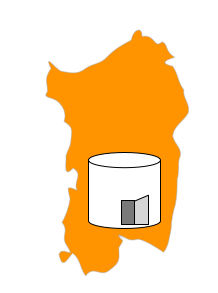 | The Open Database Camp 2011 opens today with the Welcome Party, starting today at 7pm CEST. The party (with good Italian food and drinks) is open to all the ones who have registered in the Attendees list. By car you have to reach Pula, take Via Nora (Nora Street), than Via Sant'Efisio (Sant'Efisio Street), until the end, directly to the party location. Organisers will also make a bus available on Friday 6 May, leaving from Pula Hotels (Nora Club Hotel - Villa Madau - Baia Di Nora - Is Molas - Marin Hotel - Is Morus Hotel) around 18:30 and reaching Nora. From Nora back to Pula Hotels a bus will leave around 21:00 and 22:00. |
There will be a bus collecting participants from the hotels at 8:30am and the same bus from the conference venue (Sardegna Ricerche) back to the hotel in the evening.
Sessions
Open Database camp is an Un-conference. As with the previous editions, the schedule will be decided on the spot, on Saturday. You can list your intended sessions and your wishes in the Sessions page.Logistics
You will need an ID for your wifi access. (Sorry, it's a law requirement)(*). If you want your username and password, you should collect it at the reception as soon as possible.Customized meetings
There will be room for 1:1 meetings between attendees, if you like to do so. You will find a board with the names of all attendees and their affiliation, and you can easily schedule a meeting with them.(*) The law has expired but after having put the fear of the state into every internet provider, the lawmakers have not said how the new regulations should be applied. Regretfully, we have still to live with the old rules.
Monday, May 02, 2011
Introducing the Flying Clusters, and more than MySQL replication
 | My Colleague Linas Virbalas has just crossed the boundary between real and virtual and has started a blog, titled Flying Clusters. Linas is a gifted developer who is taking care of the special projects. One of such projects is replication between MySQL and PostgreSQL, which works quite well. |
We are also more ambitious, and we are exploring ways of replicating to NoSQL entities. We will start with MongoDB at a dedicated SQL to NoSQL Replication Hackathon, where we will attempt the creation of n applier for MongoDB during the Open Database Camp conference.
Subscribe to:
Posts (Atom)


